HVLP or HPLV What Are the Differences and Why Do They Matter?
If you’ve been researching dust extraction systems, you’ve probably come across the acronyms HVLP and HPLV. At first glance, they seem like simple variations — just a few letters swapped around. But in fact, they describe two very different approaches to dust collection, and choosing the wrong one could mean your workshop isn’t nearly as clean or safe as you think.
This article breaks down the differences between HVLP and HPLV systems, what each one is best suited for, and why understanding this distinction is critical when designing or upgrading your extraction setup.
What Do HVLP and HPLV Stand For?
HVLP stands for High Volume, Low Pressure
HPLV stands for High Pressure, Low Volume
These terms describe how the system moves air — and that has major implications for what type of dust it can capture effectively.
HVLP: High Volume, Low Pressure
Most traditional workshop dust extractors — especially those with large impellers (fans) and filter bags — are HVLP systems. They rely on high airflow (measured in cubic feet per minute, or CFM) to move large volumes of air and capture visible dust and debris.
Strengths:
Excellent at collecting bulk chips and coarse dust from planers, jointers, and table saws.
Compatible with wide hoses and open ductwork systems (100mm/4” and above).
Many low-cost, entry-level machines available.
Weaknesses:
Struggle to maintain effective suction through narrow hoses or long duct runs.
Poor at capturing fine, airborne dust — the kind that poses serious respiratory risk. Why Microns Matter
Low static pressure means they lose performance when faced with resistance (filters, bends, etc.) Airflow – Critical or Confusing?
In simple terms: HVLP systems can move a lot of air, but they can’t pull very hard.
HPLV: High Pressure, Low Volume
HPLV systems are less common in woodworking but increasingly used for fine dust extraction, especially in setups where health and air quality are a top priority.
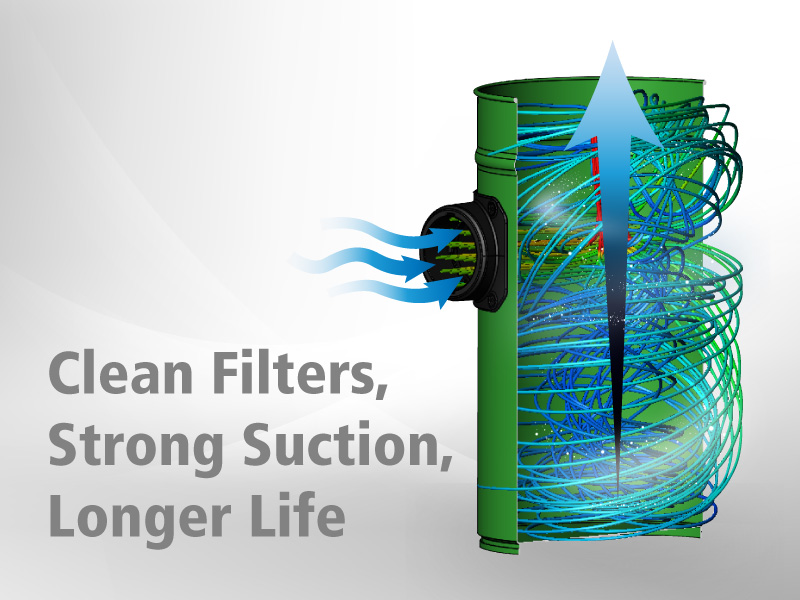
They use high static pressure (measured in inches of water lift or pascals) to pull air through narrow ducts, fine filters, and long pipe runs — even when there’s resistance.
Strengths:
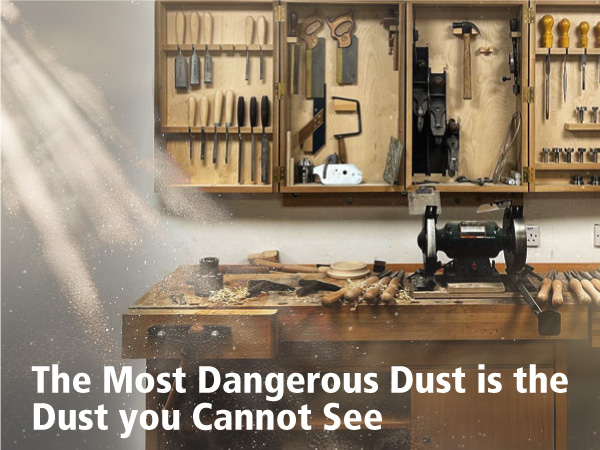
Superior at capturing fine dust and airborne particles (PM10 and PM2.5)
Maintain suction through fine filters, HEPA cartridges, and long ductwork
Ideal for modern machines with small ports or integrated fine dust control and can be used with benchtop machines and even hand held power tools
Generally more compact as filters can be much smaller but still effective because they do not rely on surface area to maintain airflow
Weaknesses:
Lower airflow means not as effective for collecting large volumes of chips – unless using multiple or very high-powered motors.
Motors get hot and can need periodic cool down periods.
Use vacuum motors and sound can be an issue for some
In short: HPLV systems don’t move as much air, but they pull much harder — which is exactly what’s needed for fine dust and health protection.
Why Airflow Is Not the Whole Story
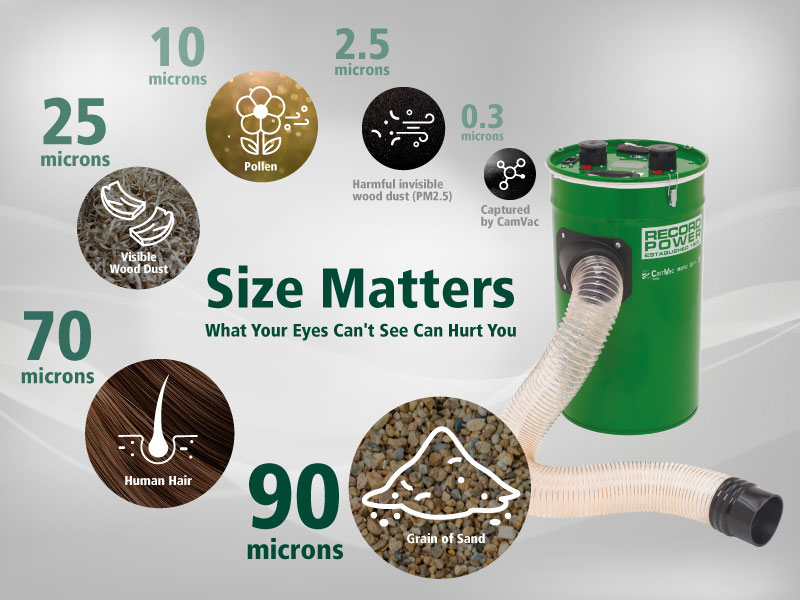
Different systems capture different sizes of particles. Here’s a quick breakdown:
Many extractor specs highlight airflow (CFM) as the key measure of performance. And for chip collection (HVLP), that’s important. But for fine dust — the most dangerous type — what really matters is pressure and filtration.
An HVLP extractor might claim 1,000 CFM — but if it can’t maintain suction through a fine filter, it won’t capture the particles that matter most.
On the other hand, an HPLV system might move only 200 CFM, but with high enough pressure to pull air through a fine filter and extract harmful dust at the source.
You need to collect large chips and shavings from high-output machines
Your duct runs are short and open or large diameters (120mm / 5” and above)
You’re prioritising volume and airflow over filtration
Choose HPLV if:
You want to capture fine dust at the source
You’re using sub-micron filters
You prioritise air quality and long-term lung health
For larger workshops where alot of wide board planing or heavy chip waste is created, the best approach is a hybrid setup — HVLP for chip collection and HPLV for fine dust and multiple duty operations. But for many average workshops an appropriately specified HPLV offers fine dust protection and flexibility right out of the box, but with multiple motors, bag collection or interceptors can do a very credible job on most users needs for chips and waste as well.
Some systems are Hybrid in nature and blend the benefits of both systems – see