


CamVac
Knowledge Hub
-

CamVac Series
-

Made in Britain
-

Made in Sheffield
Dust Extraction Buyer’s Guide

Choosing the Right System for Your Workshop – and How to Avoid Common Pitfalls
Whether you are just starting out or upgrading your workshop, effective dust extraction is one of the most important – and misunderstood – investments you will make. It’s about more than convenience. It’s about your health, your safety, and the long-term performance of your tools.
This guide walks you through the key options, explains what really matters (and what does not), and links to in-depth articles for those who want to dig deeper. By the end, you will understand what kind of extraction suits your workshop best – and what to avoid.
Why Dust Extraction Matters
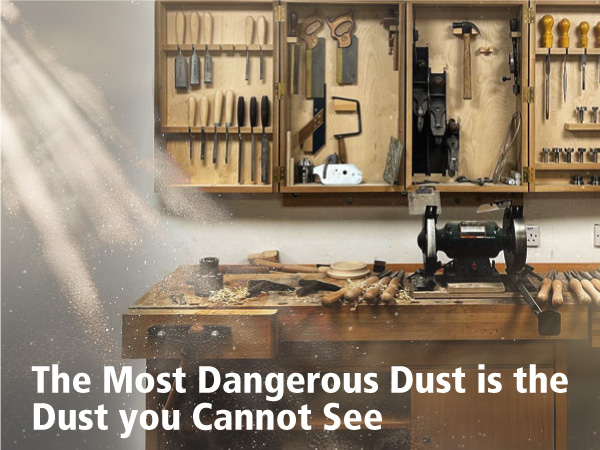
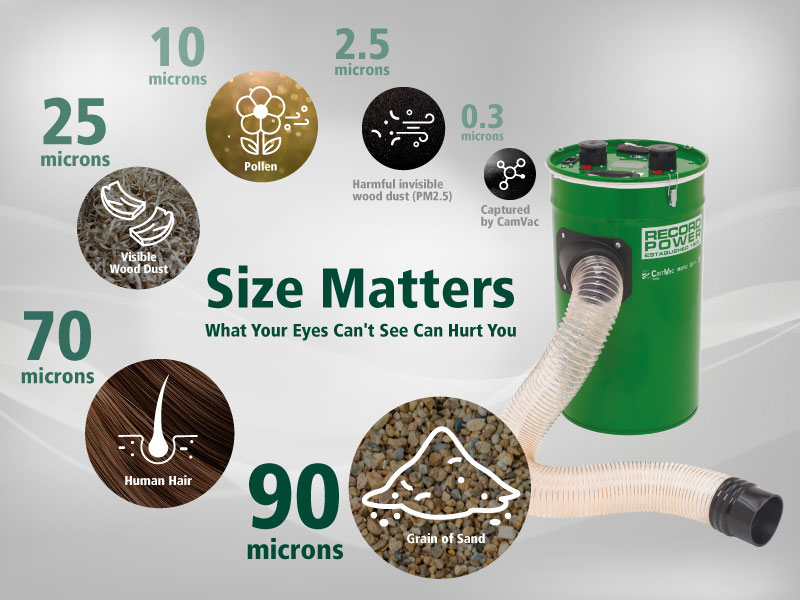
Dust is not just a nuisance. It is a serious health risk – especially the fine, invisible particles created by sanding, routing, woodturning and cabinet making. These tiny particles (PM10, PM2.5 and below) penetrate deep into your lungs, where they can accumulate over time, leading to chronic respiratory issues. Some wood dust is officially classified as a carcinogen in many countries.
And it is not just your health at stake. Dust also builds up inside your machines — affecting performance, damaging electronics, and reducing lifespan.
Whether you’re a keen hobbyist or a professional, good extraction is one of the smartest workshop upgrades you can make.
Understanding Your Options: Three Main Strategies for Dust Control
Dust control isn’t one-size-fits-all. In fact, most well-designed workshops use a layered approach. Here is a breakdown of the three core systems – and what each does best.
1. Primary Extraction Systems: Vacuum-Based (HPLV) and Chip Collectors (HVLP)
These are the backbone of any dust control strategy – systems that remove dust and chips directly from machines as you work.
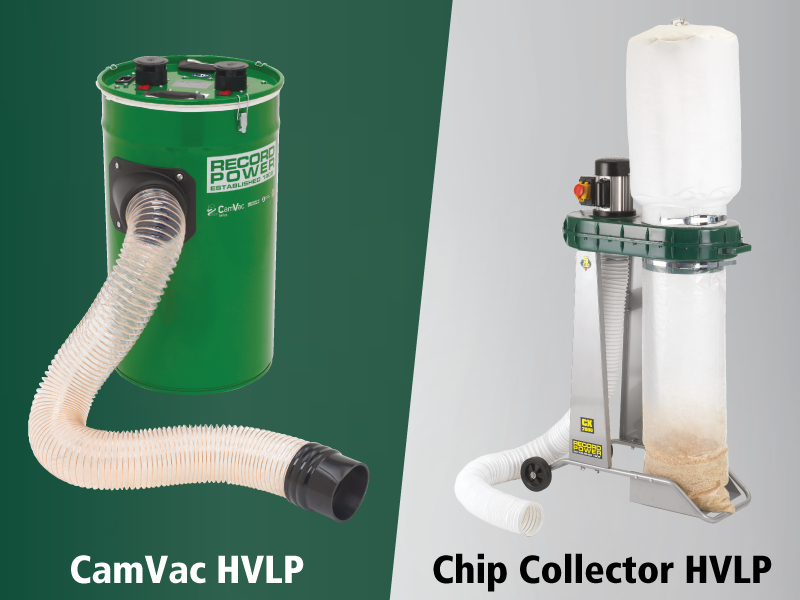
Vacuum-Based Extractors (HPLV)
Also known as high-pressure, low-volume systems, these use strong suction to capture fine dust at the source. Ideal for routers, sanders, benchtop tools, and situations where small ports and long hoses are involved.
Pros:
- Compact, powerful, and efficient
- Effective with narrow hoses and fine filters
- Sub-micron filtration (often 0.3–0.5 micron)
- Some systems offer modular motor options and noise reduction
Cons:
- Can be louder than some impeller systems (though quieter models exist)
- May need multi-motor setups for chip-heavy tasks like heavy planing of wide boards
Chip Collectors (HVLP)
These systems move large volumes of air at low pressure, making them ideal for removing chips from machines like planer–thicknessers and jointers.
Pros:
- Excellent for high-volume chip waste
- Lower-pitched sound (often perceived as quieter although dB ratings often similar or even greater)
- Low cost of entry in basic setups
Cons:
- Standard filter bags do not capture the most dangerous dust (PM2.5, PM10)
- Cartridge filters are large, expensive, and even then rarely filter below 1 micron
- Large footprint
- Cannot be used effectively with longer hose runs or smaller hose diameters and reducers for smaller machines or handheld power tools.
2. Secondary Support: Ambient Air Filters
Mounted to the ceiling or wall, air filters cycle the workshop air and capture fine, invisible dust that can linger for hours.
Pros:
- Help clean the air whilst working and afterwards
- Low maintenance
- Good for shared or enclosed spaces
Cons:
- Do not capture dust at source
- Do not protect your tools or machines from buildup
- Filtration quality varies
Ambient Air Filters can be a valuable backup to your primary system but here too filtration and performance can vary greatly – so ensure you buy an air filter that can extract to 1 micron or below – targeting airborne dust that poses the greatest health risk and is hardest to remove once circulating. Ensure the air filter has adequate airflow to keep that filter working over time. Features like remote controls and timer functions are real added value for this type of product as they can be mounted out of the way and set to run cleaning the air long after you have left the workshop.
3. Personal Protection: Respirators and Air-Fed Masks
PPE is your last line of defence – especially valuable during sanding, working with exotic or known hazardous woods, or in poorly ventilated spaces.
Pros:
- Highest personal protection when worn correctly
- Affordable entry points (e.g. FP2/FP3 half-masks)
- Air-fed systems provide face and eye protection too
Cons:
- Comfort and fogging issues, especially with glasses
- Must be worn consistently to be effective
- Does not protect others or reduce workshop dust
- Air Fed systems can cost more than a primary extractor
PPE provides the best personal protection – but only whilst being worn. It is highly recommended as a supplement to other systems – particularly when sanding, using known irritants or cleaning machines and emptying dust extractor waste. But PPE alone isn’t enough.
So, What is the Best Strategy?
Most workshops benefit from a layered approach:
Dust Type / Risk | Best Solution |
Chips from planers and jointers | HVLP chip collector with cartridge filter (as close to 1 micron or below as possible) |
Fine dust from sanding, sawing, turning, or routing | HPLV vacuum extractor with sub-micron filtration |
Residual airborne dust | Ceiling-mounted air filter with long-life, high-efficiency filters |
Direct user protection | Quality FP2/FP3 respirator or air-fed face mask during high-risk tasks |
What Should You Look For?
Primary Extractors are essential – they are the only solution that protect your health and your machinery. Supporting systems like ambient air filters and personal protective equipment are highly recommended but are not enough on their own.
When choosing a primary system here are the most important things to consider – and the most common traps to avoid.
Key Considerations:
- Filtration Quality: Look for sub-micron filtration (0.3–1 micron). Bag filters alone are rarely enough.
Want to know more? Why Microns Matter
- Airflow vs Pressure: Do not confuse high airflow with better extraction. Many tools need suction power (pressure), not just air volume.
Want to know more? Airflow – Critical or Confusing?
- Tool Compatibility: Match your extractor to your tool types. A planer has different needs to a palm sander.
- Noise and Footprint: A system that is quiet, compact, and easy to move or mount will be used more – and better maintained.
- Ease of Use: Systems that clog easily or need constant filter changes do not last long in real-world use.
- Upgrade Paths: Can you add interceptors, hoses, accessories, or extra power if your needs grow?
Common Pitfalls to Avoid:
- Trusting airflow ratings without context
Want to know more? Airflow – Critical or Confusing?
- Buying a chip collector for fine dust and expecting lung-safe filtration
Want to know more? Why Microns Matter
- Reducing from 100mm or above to 32 mm ports (and wondering why dust is not captured)
Want to know more? HVLP or HPLV – What Are the Differences and Why Do They Matter?
- Thinking a loud, bulky extractor is always more powerful
- Believing a low upfront price is a bargain – especially if filter upgrades become necessary to protect your lungs and health
Summary: Which Extractor Is Right for You?
Workshop Size & Type | Best Option | Notes |
Large planing and jointing workshop – chips only | HVLP chip collector | Look for cartridge filters (≥ 1 micron) |
Compact workshop with routers, sanders, saws | CamVac or vacuum extractor | Fine dust, quiet, adaptable |
Mixed use, growing needs | CamVac modular system | Flexible, good filtration, scalable |
Final Thoughts: Where CamVac Fits In?
A good dust extractor should do more than clear shavings — it should protect your lungs, your tools, and your time. That means thinking beyond airflow and focusing on real-world performance: filtration quality, ease of use, and flexibility.
There’s no one-size-fits-all solution. In workshops with a wide range of machines, you may benefit from a blend of extractors and secondary systems. The right system depends on your tools, space, usage patterns, and priorities.
But for small to medium workshops — especially with mixed tool setups — CamVac offers a powerful, flexible hybrid extraction system that bridges the gap between chip collectors and vacuums:
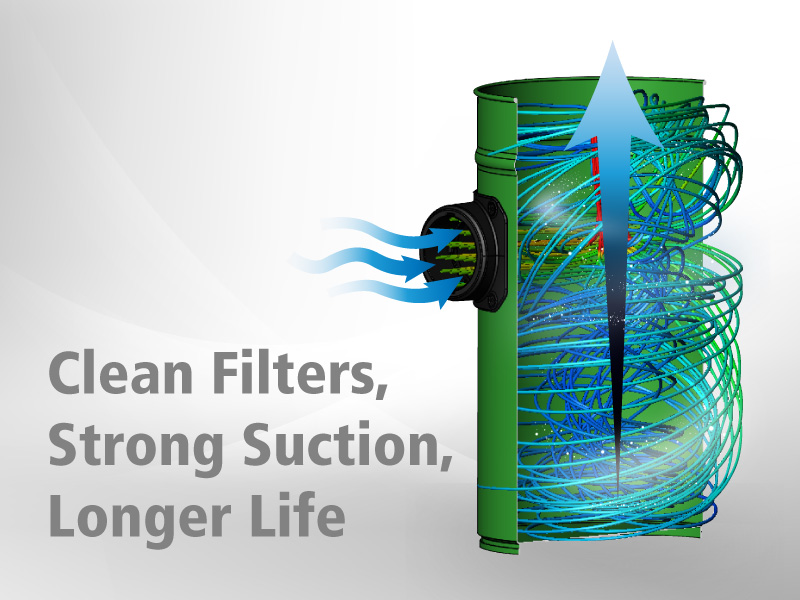
- Strong negative pressure that works with reducers and fine filters
- Genuine sub-micron filtration — standard, not optional
- Multiple motor options to meet varied workloads
- Compact sizes with expansion options only if needed
- Lower noise levels
- UK-made quality and strong support
It’s not the only solution — but it’s one of the few that strikes this balance without the need for costly upgrades or complex installs.
The Bottom Line
Whichever system you choose, remember:
The best extractor isn’t the biggest or loudest – it is the one that fits your tools, protects your health, and performs in the real world.
Start with a strong primary system. Then add ambient filters or personal protection as needed. Build your setup around your needs – and do not let old assumptions or spec sheet marketing mislead you.
Continue your journey:
Want Personalised Advice?
Every workshop is different — and the best extractor is the one that fits yours.
For personalised advice, contact your local Record Power dealer and find the ideal solution for your tools, space, and budget.
Discover more...
If you’ve enjoyed reading this guide, why not take a look at some of our blogs?