Airflow is one of the most commonly quoted specs for dust extractors. But is it really the best way to measure performance?
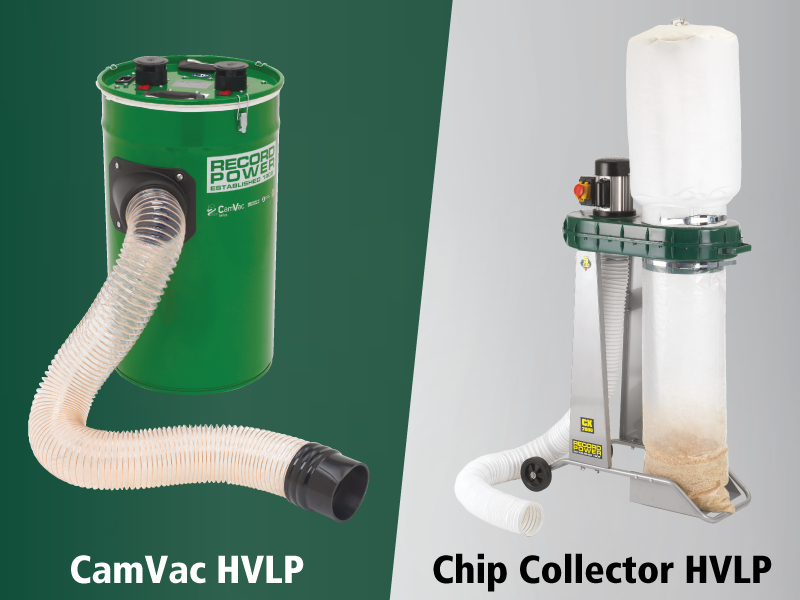
The short answer: yes – but only in the right context. For chip collection systems (High Volume Low Pressure or HVLP), high airflow is essential. But when it comes to fine dust, high airflow alone can be misleading – or even dangerous – if it creates a false sense of protection.
This article explains what airflow actually means, why it’s only part of the story, and what other factors – like pressure and resistance – matter just as much.
What Is Airflow?
Airflow is typically measured in cubic feet per minute (CFM) or litres per second (L/s). It tells you how much air the system moves in a given time – and by implication, how much material it can carry away.
In an open system with no resistance (like a wide hose sucking up shavings), high airflow is a good thing. That’s why most traditional HVLP systems are built around this principle.
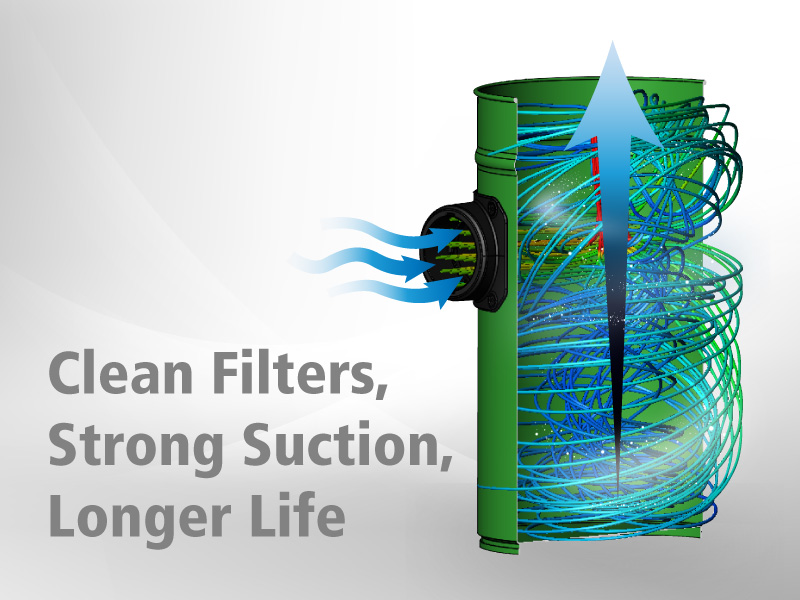
But here’s the catch: airflow drops rapidly when you add resistance – like fine filters, long ductwork, or narrow ports.
Airflow Without Pressure Is Like Speed Without Torque
Think of it like this:
Airflow (CFM) is like speed — how fast you can go
Static pressure is like torque — how hard you can pull
A car can have a high top speed but if it has no torque – it won’t get up a hill. Similarly, an extractor with high airflow but low pressure won’t pull dust effectively through a fine filter, narrow tube or longer pipe run.
That’s why static pressure (measured in inches of water lift or pascals) is equally important, especially for fine dust control.
Why Airflow Alone Can Be Misleading
Here’s a common scenario:
A spec sheet says “1,200 CFM!”
That sounds great – more airflow means better extraction, surely?
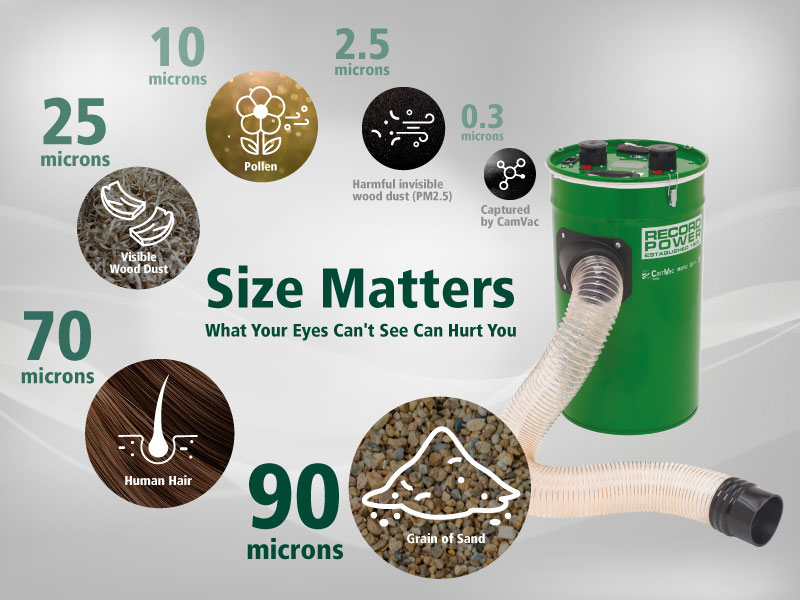
But once you connect that extractor to a 1-micron filter and a 3-metre duct, airflow drops dramatically.
The fine dust stays suspended – and you breathe it in.
Meanwhile, a smaller High Pressure Low Volume (HPLV) system might move “only” 250 CFM – but maintains that airflow (even against resistance such as pulling fine dust through a sub-micron filter) and capturing the most dangerous dust at the source.
Not at all. Airflow is still critical — especially for:
Removing large chips and shavings
Feeding wide ductwork or multiple machines at once
Maintaining clear paths in open systems
But it must be balanced with pressure and system design. That’s where alternative measures like Air Watts come in.
What Are Air Watts?
Air Watts = Airflow × Pressure.
It’s a single number that reflects how much useful work an extractor can actually do – especially through resistance.
While not widely used in woodworking, Air Watts are standard in vacuum cleaner performance testing — because they reflect real-world conditions (filter load, hose length, tool resistance).
An extractor with high CFM but low pressure may have low Air Watts. A system with moderate CFM but strong pressure can have higher Air Watts – and better fine dust performance.
How to Think About Extraction Performance
Instead of looking at just one number, think about the balance between:
Factor
Relevance
Airflow (CFM)
Great for large volume chip removal
Static Pressure
Crucial for fine dust and long duct runs
Filter Efficiency
Determines what size particles get captured
Air Watts
Measures useful power through resistance
System Matching
Duct size, motor type, and workload must all align
Key Takeaways
Airflow matters – but it’s not enough on its own.
High airflow + low pressure = poor fine dust control.
Static pressure is key for pulling through filters and ducting.
Air Watts offer a better single-number performance indicator.
Always match your extractor to your tools, filters, and layout.